Posted on

Grilled Salmon with Zucchini: 314 calories

Here is a quick and easy grilled salmon recipe you can have prepared and serve in about half an hour.  Lemon or lime has to be one of our favorite addition to seafood because it reduces the amine compound that is responsible for the “fishy” smell in seafood.

DSC_2890-2.jpg

Ingredient

Calories

Carb

Salmon, skinless 6 oz  (or 4 oz w/ skin) 241 calories  
Zucchini, sliced, 2 cups 38 calories 7 g carb
Strawberries, 4 medium 15 calories 3 g carb
½ tsp oil for zucchini 20 calories  
TOTAL 314 calories 10 g carb

The ingredients are friendly for a gluten-free diet or just when you are trying to live healthier.

DSC_2920.jpg

The seasonings are quite flexible.  We used Montreal seasoning found in the pantry, but you can make your own by combining 2 tsp paprika, 2 tsp black pepper, 2 tsp kosher salt, 1 tsp garlic, 1 tsp onion, 1 tsp red pepper flakes.

Seasoning

Lemon, 1 slice
Montreal seasoning, generous amount
Rosemary, a couple of sprigs
Thyme, a couple of sprigs
DSC_2903-2.jpg
Try to keep the baby away from your ingredients

INSTRUCTIONS:

  1. Turn on the grill for preheating.
  2. Generously rub Montreal seasoning into all sides of the salmon.  Transfer the salmon to a large piece of foil paper.  Squeeze a slice of lemon on top of the salmon.  Put the squeezed lemon on top of the salmon. Crush the thyme and rosemary with your fingers and put the sprigs on top.  Wrap up the salmon, lemon, thyme and rosemary inside the foil to prepare for grilling.  This will allow the salmon soak up the seasoning for a moist, tasty meal.
    DSC_2924.jpg
  3. For the zucchini, drizzle 1/2 tsp of oil on top. We used canola oil, but you can use whichever oil you have in the pantry.  Transfer the zucchini onto a big sheet of aluminum foil and wrap it up for grilling.

    DSC_2934.jpg
    Transfer the wrapped packages to the grill.
  4. Grill the salmon on medium heat with the lid closed for about 6-8 minutes on each side. The zucchini only needs roughly half of the time on the grill, so 2-5 minutes on each side.
    DSC_2938.jpg
  5. Open the foil.  Transfer the contents to a plate.  Serve with strawberries.  We hope this recipe gives you a couple of ideas for your next meal 🙂
    DSC_2944.jpg
Posted on 1 Comment

5 Potential Causes for Your Diet Related Cramps and What You Can Do About Them

FB_IMG_1468021997057

When you are starting a new diet and exercise program you may find yourself having leg cramps during the first few days or weeks of your new routine.  To understand why you experience this and what you can do to prevent recurrence, we have to examine the cause of muscle spasms.  

Most oftenly, leg cramps are caused by some combination of the following 5 reasons:

  1. Dehydration
  2. Electrolyte deficiency
    1. Low potassium, magnesium deficiency, calcium deficiency, and/or low sodium
  3. Vitamin deficiency
    1. Low thiamine (B1), pantothenic acid (B5), and pyridoxine (B6)
  4. Lack of muscle flexibility
  5. Overexertion

Let’s address each problem individually:

Dehydration

Drinking plenty of water (by plenty, we mean a gallon or more of water a day) is an important factor in keeping you feeling your best.  Water is critical at the microcellular level in the Krebs Cycle to generate adenosine triphosphate (ATP), which your body uses to do pretty much everything.  Ensuring that you meet your daily water intake goals will improve your energy level, as well as provide your muscles with the resources they need to function properly.  Without adequate water intake, our muscles begin to accumulate waste byproducts, commonly referred to as “toxins”, that may cause spasms or cramping.  

Electrolyte deficiency

Ingesting plenty of dark green, leafy vegetables will go a long way in keeping you out of trouble and cramp-free. Even if you are limited to low-carb foods, you can still find good sources of potassium, magnesium, calcium, and sodium.  Frequently, the two main electrolytes of concern that are responsible for leg cramps are potassium and magnesium.

The National Institute of Health (NIH) recommend a dietary amount of at least 320 mg of magnesium for women and 420 mg of magnesium for men, and 4.7 grams (or 4700 mg) of potassium for both men and women. You could be experiencing muscle cramps due to a deficiency in these minerals and if so adjusting your diet could be all that you need.

The chart below illustrate how much certain food contain in potassium and magnesium.  If you were to eat 8 oz chicken breast with 1 head of romaine lettuce and 1 cup of beets green for lunch (497 calories, 2581 mg potassium, and 192 mg magnesium), then eat 6 oz of 90% lean beef with 1 cup of spinach, 1 cup of broccoli, 1 cup of zucchini for dinner (437 calories, 3214 mg potassium, and 237 mg magnesium, you will then consume in a total of: 934 calories, 5795 mg potassium, and 429 mg magnesium, which will exceed your requirements for the two electrolytes.   

Meat/Fish Potassium Content Magnesium Content
8 oz chicken breast (230 calories) 359 mg 66 mg
6 oz 90% lean beef (344 calories) 618 mg 40 mg
6 oz salmon (354 calories) 618 mg 46 mg
8 oz tilapia (292 calories) 863 mg 78 mg
8 oz center cut pork chops (260 calories) 960 mg 46 mg
8 oz cooked chicken liver (263 calories) 526 mg 23 mg
Fruits & Vegetables Potassium Content Magnesium Content
Romaine lettuce, 1 head (108 calories) 1546 mg 88 mg
Beets green, cooked, 1 cup (30 calories) 1309 mg 38 mg
Spinach, cooked, 1 cup (44 calories) 839 mg 157 mg
Avocado, 1 cup (234 calories) 708 mg 42 mg
Edamame (soy beans), 1 cup (189 calories) 676 mg 99 mg
Zucchini, cooked, 1 cup (18 calories) 325 mg 21 mg
Cauliflower, 1 cup (27 calories) 320 mg 16 mg
Kale, cooked, 1 cup (69 calories) 296 mg 23 mg
Tomato, 1 medium ( 22 calories) 292 mg 14 mg
Broccoli, 1 cup (31 calories) 288 mg 19 mg
Strawberries, 1 cup (47 calories) 220 mg 19 mg

If you feel that you are unable to ingest the required amount of vegetables and have leg cramps that won’t go away, you may benefit from short-term supplementation with a daily magnesium and potassium tablets.   

Vitamin Deficiency

Deficiencies in Vitamins B1, B5, and/or B6 may be causing you cramps.  The mechanism behind this is not currently well understood, however evidence suggests that supplementing these vitamins may help treat and avoid cramps.

Thiamin (Vitamin B1) is necessary for the proper functioning of the muscles, nervous system and heart. Thiamin deficiency has been known to cause insomnia, fatigue, depression, constipation, irritability, heart problems and stomach problems.  Thiamin is abundant in organ meats, soybeans, egg yolks, poultry, broccoli, and asparagus.  The recommended intake is 1.5 mg of Vitamin B1 daily. 

Pantothenic acid (Vitamin B5) is responsible for the production of coenzyme A that is associated with the metabolism of fats and carbohydrates as energy sources.  Pantothenic acid is found in organ meats, egg yolk, and broccoli, fish, shellfish, chicken, milk, yogurt, mushrooms, and avocado. Deficiencies are rare, but pantothenic acid deficiency may result in fatigue, insomnia, depression, irritability, vomiting, abdominal and leg muscle cramps.  The recommended intake is 3-7 mg of Vitamin B5 daily.

Pyridoxine (Vitamin B6) assists in the degradation and production of amino acids and in the process that converts amino acids into fats or carbohydrates. Vitamin B6 is involved in fat/carbohydrate metabolism, the removal of fluids during premenstruation, and healthy skin. It can reduce symptoms of hand numbness, leg cramps, muscle spasms. Deficiencies have been known to cause anemia, dermatitis, hair loss, anxiety, leg cramps, water retention, anemia. The recommended intake is 1.3 to 1.7 mg of Vitamin B6 daily.

Lack of muscle flexibility

Exercise consisting of particularly intense physical activity can cause your muscles to fatigue, become sore, and spasm.  Take every effort to stretch the muscle to cool down shortly after you exercise, and make an effort to incorporate stretching into your routine wherever limitations appear. Post exercise stretching of the muscles helps the fibers relax, reset, and promotes good circulation for recovery after exercise.  

FB_IMG_1468022089282

Overexertion

Your body needs adequate rest after a difficult workout.  Any time you put yourself through high stress episodes such as exercise, you will need time to recover so you can improve your performance for next time and give your body time to catch up with all the good you’ve done.  If the muscles are overworked and tired, you may get painful spasms that can in turn hinder your ability to stick with your gym routine.

Unfortunately as with any drastic lifestyle change, there will be unwanted side effects accompanying your new diet and exercise routines. However with a little planning and preparation you should be able to prevent muscle cramps from negatively impacting your progress. So eat right, rest well, exercise smart, and stay hydrated and keep up the good work.

Posted on

Low-Carb Beef Kabobs

Happy 4th of July.  It’s a day on which we gather and celebrate the founding of this great nation, and the many freedoms we enjoy as a result.  At Elevation Medical Weight Loss, we know that you probably aren’t feeling very “free” with so many traditional July 4th foods not fitting your diet goals. So in order to help you stay on track, here is one of our favorite healthy grill-out recipes:  Low-Carb Beef Kabobs.

DSC_2606.jpg

This is one of our favorite beef kabob recipes.  The ingredients call for cherry tomatoes, but you can omit the tomatoes for an ultra low-carb meal, which is perfect for those who are on the HCG diet plan or who were instructed to eat low-carb for the next few weeks or months.

DSC_2544
Ingredients for Low-Carb Beef Kabobs

Recipe serves 6 (274 calories each, 10 g carb per serving)
Prep time: 30 minutes         Marinade time: 2 hours       Cook time: 25 minutes

INGREDIENTS CALORIES CARB
2 lb lean beef, cut into 1-in. cubes  1352 calories
6 oz mushroom caps  44 calories 8 g carb
1 green bell pepper, cut into large chunks  33 calories 4 g carb
1 yellow bell pepper, cut into large chunks 25  calories 6 carb
1 large onion, cut into large squares 60 calories 14 g carb
30 cherry tomatoes 92 calories 20 g carb
2 cup eggplant, cubed 40 calories 9 g carb
30 Skewers
TOTAL 1646 calories 61 g carb
DSC_2559.jpg
Don’t let the baby steal your ingredients


For the marinade: mix everything below in a bowl
1/4 cup vegetable oil
1/2 cup soy sauce
1/4 cup lime or lemon juice
1 tablespoon Worcestershire sauce
1 tsp minced garlic
1 tsp pepper
1 tsp salt

DSC_2586.jpg

Have marinade in a large bowl or gallon ziploc bag.  Mix the cubed beef, onions, bell peppers, mushrooms, and eggplant in the marinade.  Stir or flip every 30 minutes.  Let sit for 2 hours.

Soak the skewers in a shallow pan of water for 10-15 minutes.  This is to prevent the skewers from breaking upon grilling.

Turn on the grill.

DSC_2590.jpg

Place beef kabobs on grill.  Grill for 7-10 minutes on each side, or until desired doneness.

DSC_2597.jpg

DSC_2610.jpg

Recipe serves 6. Enjoy this tasty meal with your family on this wonderful 4th of July holiday!


Posted on 1 Comment

9-Day Diet Meal Plan: 400 calories each meal

DSC_2534
Brazilian Steakhouse Grilled Chicken Breasts

When you are planning to eat healthier to lose weight, just exactly how do you do that if you don’t know where to start? The first step is to make a commitment. The second step is to set up a plan.  The third step is to take action and follow through.  It’s all or nothing from here on out.

First think about calories, once you have a goal number you get to decide how you prefer to reach that number. If you were instructed to eat 800 calories a day, you can have two 400 calories meal from the plan.  Alternatively, you can have one meal daily by eating two meals at once. If you were given a 1000 calories diet, you can have 2 meals plus something else that is 200 calories, and so on with 1,200 calories diet or 1,500 calories diet.

You will find that after 5-6 days of being on a low-calorie, low-carb diet that you will have significantly reduced carbohydrate or sweets cravings.  The most difficult step is getting started and making through those first few days. This is why we will present you with a sample 9 day meal plan, 2 meals a day, consisting of 400 calories per meal.  The daily carb intake is less than 30 grams of total carb (or 15-20 grams of net carbs, if you choose to count net carbs).  Why a 9 day meal plan? Mostly because it will take you roughly 9 days to plan out the rest of your 30 days commitment, or 6 months commitment.  Also, it fits nicely on this PDF here.


Day 1st  Meal 2nd Meal
1 ·         6 oz cooked skinless, boneless chicken breast (276 cal)

·         6 oz broccoli (60 cal, 12 g carb)

·         4 oz carrots (25 cal, 6 g carb)

·         1 tsp canola or olive oil (40 cal)

·         32 oz of water

·         6 oz cooked and drained 90% lean ground beef (346 cal)

·         ½  head of lettuce (26 cal, 5 g carb)

·         1 tbsp sour cream (31 cal)

·         32 oz of water

2 ·         4 large eggs (312 cal)

·         ½ lime or ½ lemon (5 cal, 1 g carb)

·         ¼ avocado (80 cal, 5 g carb)

·         32 oz of water

·         6 oz cooked skinless, boneless chicken breasts (276 cal)

·         1 large tomato (35 cal, 7 g carb)

·         ¼ avocado (80 cal, 5 g carb)

·         1 tbsp sour cream (31 cal)

·         32 oz of water

3 ·        6 oz skinless salmon or 4.5 oz salmon with skin on (241 cal)

·       ½ lime or ½ lemon (5 cal, 1 g carb)

·       6 oz boiled kale (48 cal, 10 g carb)

·       3 oz blackberries (35 cal, 8 g carb)

·         32 oz of water

·         4 large eggs (312 cal), scrambled

·         1 large tomato (35 cal, 7 g carb)

·         ½ tsp canola oil (20 cal)

·         8 strawberries (31 cal, 7 g carb)

·         32 oz of water

4 ·         8 oz sirloin tip Steak ( 320 cal)

·         8 oz asparagus (42 cal, 8 g carb)

·         8 strawberries (31 cal, 7 g carb)

·         ½ lime or ½ lemon (5 cal, 1 g carb)

·         32 oz of water

·         8 oz tilapia (292 cal)

·         8 oz asparagus (42 cal, 8 g carb)

·         4 oz carrots (25 cal, 6 g carb)

·         4 oz blackberries (32 cal, 7 g carb)

·         32 oz of water

5 ·         6 oz ground turkey for burger (253 cal)

·         1 large tomato (35 cal, 7 g carb)

·         ½ head of lettuce (26 cal, 5 g carb)

·         ¼ avocado (80 cal, 5 g carb)

·         ½ lime or ½ lemon (5 cal, 1 g carb)

·         32 oz of water

·         8oz beef eye of round, lean, trimmed to 1/8″ fat (281 cal)

·         ½ head of lettuce (26 cal, 5 g

·         32 oz of water

·         8 oz spinach (53 cal, 8 g carb)

·         ½ lime or ½ lemon (5 cal, 1 g carb)

·         8 strawberries (31 cal, 7 g carb)

·         32 oz of water

6 ·         6 oz cooked skinless, boneless chicken breasts (276 cal)

·         4 oz edamame soy beans (138 cal, 11 g carb)

·         32 oz of water

·         4 large eggs (312 cal), scrambled

·         1 large tomato (35 cal, 7 g carb)

·         4 oz spinach (26 cal, 4 g carb)

·         32 oz of water

7 ·         3 baked skinless chicken thigh (323 cal)

·         8 oz mushrooms (50 cal, 8 g carb)

·         4 stalks celery (24 cal, 5 g carb)

·         32 oz of water

·         8 Oz Pork Chops, Top Loin, Boneless (327 cal)

·         1 medium onion (22 cal, 5 g carb)

·         6 oz turnip greens (54 cal, 12 g carb)

·         32 oz of water

8 ·         6 oz ground turkey, crumbled, for salad (253 cal)

·         ½ tomato (18 calories, 3 g carb)

·         ½ head of lettuce (26 cal, 5 g carb)

·         ¼ avocado (80 cal, 5 g carb)

·         ½ lime or ½ lemon (5 cal, 1 g carb)

·         32 oz of water

·         3 large eggs, hard-boiled for deviled eggs (234 cal)

·         3 tsp real mayo (94 calories)

·         ½ head of lettuce for a side salad (26 cal, 5 g carb)

·         1 tbsp sour cream (31 cal)

·         ½ lime or ½ lemon (5 cal, 1 g carb)

·         32 oz of water

9 ·         8 Oz Pork Chops, Top Loin, Boneless (327 cal)

·         2 cups zucchini (38 cal, 7 g carb)

·         ½ head of lettuce (26 cal, 5 g carb)

·         ¼ avocado (80 cal, 5 g carb)

·         ½ lime or ½ lemon (5 cal, 1 g carb)

·         32 oz of water

·         3 baked skinless chicken thigh (323 cal)

·         8 oz mushrooms (50 cal, 8 g carb)

·         4 stalks celery (24 cal, 5 g carb)

·         32 oz of water

Begin each day by drinking 32-0z of water.  Drink 32-oz water with each of your 2 meals. Then, drink another 32-oz in the afternoon to early evening to get your daily water intake of 1 gallon a day. Water helps reduce the dry-mouth side effect associated with the use of an appetite suppressant (such as phentermine) or complying to a low-calorie, low-carb diet plan. Most individuals are chronically dehydrated, and water will help you feel your best while you’re working hard to achieve a healthier lifestyle.

If you have a chance to stop by our clinic, we have the tools you need for proper hydration, such as double-insulated water bottles to make your visit more convenient. These comes in a range of 24-oz to 64-oz sweat free bottles that will withhold years of abuse.

elevation-pittsburgh-water-bottles
Elevation Medical Weight Loss: Double-Insulated Water Canisters

Now that we’ve briefly covered water intake, we will discuss how to prep meals when you have an extremely busy schedule.  Most individuals can find roughly 4 hours of free time a week. During this time, you may want to go out to get groceries, prepare meals, and package them for the week.

DSC_2505.jpg

Meal planning tip: Prepare large portions of vegetables (such as steamed kale) for the week.

Sample weekly grocery items for 2-3 person

  • 5-6 lbs of skinless, boneless chicken breasts for grilling all at once or baking
  • 1 Brazilian steakhouse seasoning (great for chicken, beef, or fish)
  • 2 lbs of 90% lean ground beef
  • 1 lb of ground turkey
  • 1 lb of salmon or other fish
  • 2 dozen eggs
  • 1 lb of broccoli
  • 1 lb of kale
  • 2 lbs of zucchinni
  • 1 lb of asparagus
  • 1 package of mushrooms
  • 1 bundle of celery
  • 1 small bundle of carrots
  • 2 head of lettuce
  • 8 oz sour cream
  • 4 limes or lemon
  • 1 avocado
  • 1 package of strawberries
  • 1 package of blackberries

What to do with the 6 lbs of chicken breasts you brought home? Rub some seasoning on and grill them to have meals ready for the week.

DSC_2512.jpg

We used McCormick Brazilian Steakhouse Seasoning to rub in the chicken breasts.  You can grill it right away.

DSC_2520.jpg

No oil needed. Grill on medium high heat and close to lid for 10-12 minutes depending on your grill.  Flip the chicken over .

DSC_2525.jpg

Now you can package your meals into containers to take to work and to eat during the week.

DSC_2540

We hope this post gives you a bit of guidance on how to begin your weight loss journey. Once you get started, you may find that the whole process will become more intuitive and that you can stick with it as long as you choose to.

Posted on 5 Comments

What’s the difference? HCG Diet vs Phentermine Diet

DSC_2163.jpg

When someone comes to us looking to lose weight, we typically prescribe one of two diet and medication programs.  The program we chose depends on how much weight they want to lose over the next 30 days and which methods they are willing to employ.

Phentermine (also known as Adipex, or Adipex-P) is an appetite suppressant that we commonly prescribe to help people lose from 5-15 lbs a month.  Actual results during any 30 day period can vary depending on an individual’s starting weight, body type, age, gender, and most importantly, will power. Since phentermine is a stimulant, your energy will improve despite eating much less than you typically would while also experiencing a diminished desire to eat food.

The HCG diet is specifically geared toward rapid fat loss, helping you achieve as much as 20-35 lbs of weight loss in 30 days. As with phentermine, individual results depend on your body type, how much extra weight you are carrying, and your adherence to the diet program and instructions. HCG attacks the other side of hunger, providing you the opportunity to operate comfortably at very low levels of calorie intake, while allowing you to burn off extra fat to provide this energy.

HCG is a hormone produced during pregnancy that encourages the metabolism of fat, reducing some aspects of hunger while encouraging the body to burn significantly more fat than it ordinarily would in a 24 hour period. If you feel highly motivated and want to lose in the range of 20-35 lbs a month, we may suggest the HCG diet program as a good choice for you, and in some cases HCG and phentermine have been used in combination for a safe way to reach your 30 day fat loss potential.  

So how are these two diets different from one another?  There isn’t much different except that the phentermine program is a little more flexible in terms of which foods to eat.  While both diets are restrictive in nature, the HCG program calls for a lower calorie intake and is more sensitive to the benefits of eating a low carbohydrate diet. Technically you could eat the same foods on either diet, but when you try to keep your calories low you will want to stay away from calorie dense foods or be left unsatisfied more often.

Anytime you eat a low calorie diet, you WILL lose weight.   However, phentermine will assist by dramatically reducing your appetite for food, providing energy, and removing the discomfort associated with being on a calorie-restricted program.  Of course you can definitely lose weight without any medications or assistance, but phentermine gives you that extra control and motivation because it removes the discomfort factor.  As a result, this will allow you to more easily stick to the diet plans you make for yourself.   HCG shots have similar effects of improving energy and reducing hunger, however this is achieved by utilizing body fat to create energy while protecting muscle mass rather than directly as a stimulant.

So what do I eat on the phentermine diet vs the HCG diet?

Phentermine Diet HCG Diet
·         1000-1600 calories per day ·         600-1000 calories per day
·         30 grams of total carbs, including dietary fiber (or 15-20 grams of NET carbs) if possible, but you may have up to 100 gram of carbs with good weight loss results ·         30 grams of total carbs, including dietary fiber (or 15-20 grams of NET carbs)
·         Lean meats, eggs, low-carb cheeses ·         Lean meats, eggs, low-carb cheeses
·         Oils, butter, and fat are OK (watch calories goal) ·         Oils, butter, and fat are OK (watch calories goal)
·         Green, leafy low-carb vegetables ·         Green, leafy low-carb vegetables (these should be your primary source of carbs)
·         Bread, pasta, sugar, or starch will hinder your progress. Try to avoid if possible ·         No bread, pasta, sugar, or starch
·         A small handful serving of berries or other tart fruits if desired

·         Other fruits or treats may be OK depending on your goal

·         Can only have berries or other tart fruits if within total daily carb limit
·         1-2 drink of alcohol per week is OK, as long as it meets your caloric requirements ·         No alcohol, and no beverages with calories except low-carb protein shakes
·         Use a water pill as needed for fluid retention or bloating ·         No water pill, unless you are already taking a water pill from your family doctor.
·         A small amount of Splenda, Truvia, Stevia and other artificial sweeteners are OK ·         A small amount of Splenda, Truvia, Stevia and other artificial sweeteners are OK
·         1 gallon of water a day is the general recommendation ·         1 gallon of water a day is the general recommendation
·         No restriction on activity, typically exercise is not required ·         No restriction on activity, typically exercise is not required

As a general guideline, we provide you with a food list below.  For a downloadable Food List PDF, click here.  FYI, this list is not comprehensive, however, if you choose your foods from this list, you are probably safe.

Meat & Fish

  • Eggs
  • NY Strip or T bone
  • Filet Steak
  • >90% lean beef
  • Top Round Steaks or
  • Roast         
  • Top Sirloin
  • Flank Steak
  • Eye of Round
  • Stew Meat
  • Skinless chicken
  • Chicken liver    
  • Pork     
  • Ground Turkey, Turkey
  • Breast slices or cutlets
  • Lamb
  • Whitefish
  • Salmon    
  • Tuna

Vegetables        

  • Green Leafy lettuce (red, green, romaine)
  • Turnip Greens        
  • Mustard Greens     
  • Broccoli
  • Asparagus
  • Spinach
  • Bell Peppers (Green or Red)
  • Brussels Sprouts
  • Artichoke
  • Cauliflower
  • Cabbage
  • Celery
  • Cucumber  
  • Carrots     
  • Eggplant   
  • Onions
  • Garlic    
  • Tomatoes
  • Zucchini
  • Kale
  • Mushrooms

Fruits

(only a small handful total daily)

  • Strawberries
  • Blackberries
  • Blueberries
  • Raspberries
  • Lemons or limes
  • Avocado
  • Tomatoes

Oils & Butter

  • Olive Oil
  • Canola Oil
  • Vegetable Oil
  • Butter
  • Flax seed oil
  • Avocados
  • Fish Oil
  • Mustard
  • Garlic

Seasoning

  • Onions
  • Dry seasonings (Herbal, etc.)
  • Scallions
  • Lemon
  • Lime
  • Salt
  • Pepper

Beverages

  • Water (target is 1 gallon/day)
  • Water with lemon/lime
  • Flavored water
  • Iced tea (without sugar)
  • Herbal tea
  • Stevia/Truvia/Splenda

In the next few posts, we will include several meal plans for optimum weight loss.


Posted on 2 Comments

HCG Diet Program at Elevation Medical Weight Loss

Since we officially opened Elevation Medical Weight Loss on June 1, we have had a few questions regarding our HCG injections diet program.

What does your HCG program consist of?
Our program is a 30-day diet plan geared for rapid fat loss.  The 30-day HCG program comes in a 4000 IU vial that you use 12.5 units daily.  We do not offer drops.  In our experience, the most effective HCG protocol is by injection, and this is done by using a very tiny needle that goes right beneath the skin.  The needle is about as thin as a fishing line and ⅓ inch long.

I really would like to try the HCG program to jumpstart my weight loss, but I am not comfortable with needles.  How do I know that I can perform the injections myself?

The needles we use are ultra-fine insulin syringes, which you will barely feel the shot. Here is a video to demonstrate how simple it can be for you to perform the injection.  Also, we would be more than happy to walk you through an actual demonstration with sterile water when you come by the clinic.

How to Use HCG injection syringe on the stomach

This video illustrates how to self-administer HCG diet injections for rapid fat loss at Elevation Medical Weight Loss in Pittsburgh

Posted on

Special Promotion June 2016

elevation-pittsburgh-weight-loss-coupon.jpg

Come see us this week to use this $10 gift voucher.  Valid on all your weight loss purchases for both new and current clients. Limit 1 per person. Can be combined with other promotions and/or offers.

Show this gift voucher on your phone/tablet to redeem.

Posted on

Super Easy Deviled Eggs

DSC_1168

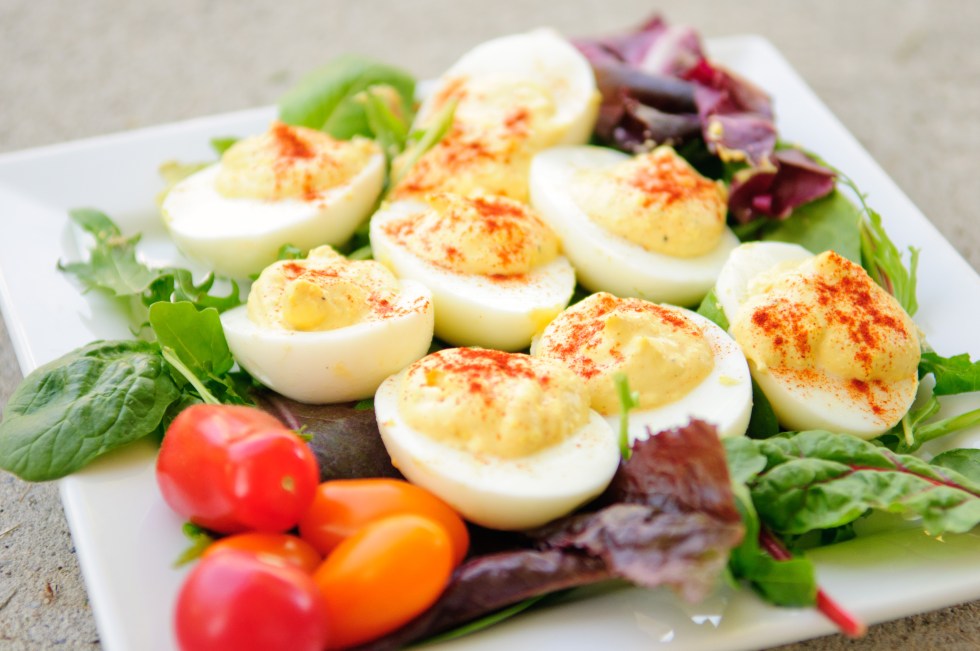
What to do when you have an extra dozen of eggs in the fridge and about 40 minutes? Turn them into a tasty meal by adding some spices and condiments.

Super Easy Deviled Eggs

    Prep time: 15 min          Wait Time: 20 minutes             Cook time: 10 min

Ingredient Calories Protein Carbs
12 large eggs 880 calories 76 g 5 g
1/3 cup real mayonnaise 480 1 g 1 g
1 tbsp yellow mustard
½ tsp paprika
1/3 tsp ground pepper
1/3 tsp salt
TOTAL 1360 calories 77 g protein 6 g carb

**recipe makes 24 deviled eggs.  Serves 4.   Each serving is 6 pieces, containing 340 calories, 26 g protein, 1.5 g carb.  Each deviled egg piece is 56 calories. **

DSC_1142.jpg

Instructions:
1. Place eggs in a large pan and cover completely with an extra inch of water on top. Turn on high heat, cover with lid.
2. Bring to a hard rolling boil.  As soon as the water looks angry, turn off the heat and let the eggs sit for 12-15 minutes with the lid on top.  This will make the perfect hard boiled eggs.
3. Carefully drain hot water down the sink.  Submerge the eggs in cold tap water to cool.  Drain, then cover the eggs with a generous amount of ice for 3-5 minutes for further  cooling. 4. Drain the ice and water.  With the lid on, roll the eggs around vigorously to crack the shells. See video.

DSC_1150
5. Slice the eggs in half.  Put all the egg yolk in a quart-sized ziplock bag.  Mix in mayo, mustard, paprika, salt and pepper.  Squeeze the bag to blend the mixture.

DSC_1155
6.  Cut a corner of the ziplock bag and squeeze the yolk mixture on the half egg.  Sprinkle on paprika/chili powder and serve.   

DSC_1159.jpg

Posted on 20 Comments

9 Tips for Losing Weight from a Fit Physician

DSC_1283Throughout my  years helping thousands of clients lose literal tons of fat, I have received many questions about how I managed to stay lean & lose my baby weight just months after giving birth to my now one year old daughter.  So here are the highlights:

  1. Drink more water. A lot more,  actually. . You may have heard that you should drink 8 glasses of water a day.  I’d second that advice, so long as you use 16-oz glasses/bottles.  That’s right, I advise that you should drink about 1 gallon (128 oz) of calorie-free fluids daily to stay well-hydrated. Quite often when your body sends signals that it is thirsty, your brain will misinterpret this thirst as hunger.  Drink 16-oz of water when you first think you are getting hungry between meals and wait 30 minutes to see if you are truly hungry.  Having extra hydration is especially important when you are using an appetite suppressant (such as phentermine or Adipex) as a tool to aid in weight loss.
  2. Don’t snack, have real meals instead.   This is important when the goal is fat loss. Since you are on a calorie-restricted diet and are allowed ~1,200 calories a day, you need to have real meals (breakfast, lunch, and dinner) at planned times.
    mailan-snacks
  3. Keep your meal times consistent. If you must have 3 meals a day, have designated time (usually a 1 hour window) that you will eat.  If you miss this time frame, you must wait until the next meal.
  4. Delay breakfast for as long as possible. If you’re not hungry, don’t eat.  Evening times may be the worst time for snacking, so if you are still under your calorie goal by dinner, you can enjoy your dinner a bit more 😉
  5. Calorie in < calorie out. By eating a calorie deficit diet, the majority of healthy individuals WILL lose weight. That includes you.
  6. You cannot out-exercise what you eat. Well, you probably can but you don’t want to. Spending 2 hours in the gym will most likely not make up for the “cheat meal” from last night. A large amount of time is required to burn off even a paltry 100 calories, you don’t even want to imagine how long it’ll take to burn off that Tall Mocha Frappaccino from Starbucks.
  7. Track calories for consistent weight loss results.  I have used ALL of the apps out there, from Myfitnesspal to Lose It! to Fat Secret and many other ones.  My favorite is MyPlate Calorie Counter from Livestrong.  You will obtain excellent results if you track calories daily for each meal. The constant reminder of what you put into you body really makes it easy to make difficult choices when you are tempted by your favorite snacks.
  8. Abs are made in the kitchen.  Really!
  9. You do not have to exercise to lose weight. Ok, I may have already said this but it bears repeating. Exercise isn’t NECESSARY to lose fat, but exercising will help reduce stress, tone your muscles and help shape your body, while making it easier to keep your weight loss progress for the long term.

Thank you for reading.  And good luck in your journey to feeling better and improving your health!